
In This Guide:
-
-
-
- 1. Introduction
- 2. The Problem: Building What You Love Instead of What the Market Values
- 3. Why Topic Validation Matters for Long-Term Scalability
- 4. Step-by-Step Solution: How to Find and Validate Your Course Topic
- 5. Practical Examples: Translating Expertise into Profitable Modules
- 6. Best Practices for Course Topic Selection
- 7. Common Mistakes to Avoid
- 8. Summary
- 9. Frequently Asked Questions (FAQs)
-
-
Introduction

Learning how to find a profitable course topic is one of the most important steps in creating a successful online course. Yet many experts make the mistake of choosing a topic before validating market demand.
This approach can lead to significant amounts of wasted time and resources.
A strong online course begins with a validated learning need. Before creating slides, recording videos, designing interactions, or setting up an LMS, you need to understand whether your proposed topic solves a real problem for a clearly defined audience.
Your course structure, instructional design strategy, and learner engagement model should ultimately influence the technology you choose—not the other way around. At Wizcabin, we support educators, consultants, and organizations throughout this process, from defining learning objectives and structuring courses in Storyline or Rise to deploying complete learning experiences through an LMS.
Finding a profitable course topic is therefore not simply a brainstorming exercise. It is an objective process that combines market research, audience analysis, problem identification, and financial consideration.
The key question is not:
“What do I want to teach?”
Instead, ask:
“What problem does my target learner need help solving, and is that problem important enough for them to invest time, money, or resources in solving it?”
Before you open an authoring tool or begin designing your curriculum, you need to confirm that the knowledge you plan to provide bridges a meaningful gap for your learners.
The Problem: Building What You Love Instead of What the Market Values
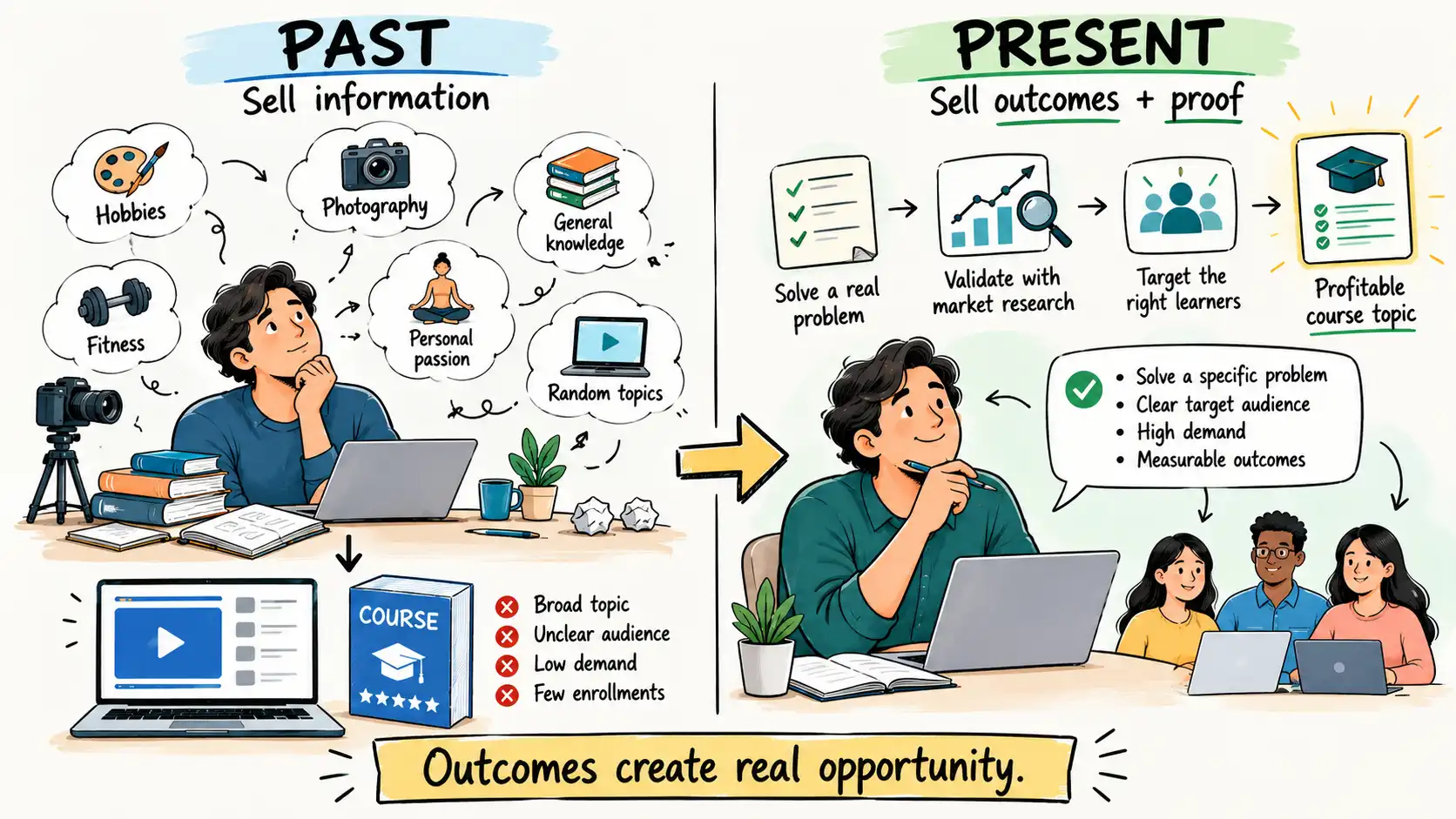
One of the most common mistakes made by first-time course creators—and even experienced subject matter experts—is building a course entirely around personal expertise or passion.
Expertise is certainly important. You need to know your subject well enough to teach it effectively. However, expertise alone does not guarantee demand.
You may have years of professional experience in a particular area and have extensive knowledge that could benefit others. But if the topic does not address a meaningful problem for your intended audience, turning that expertise into a course may not generate the results you expect.
For example, imagine an experienced business consultant who creates a comprehensive course called “Everything You Need to Know About Business Management.”
The consultant may have excellent knowledge and years of experience. However, the topic is extremely broad. A potential learner may struggle to understand exactly what problem the course will help them solve or what outcome they can expect after completing it.
Now consider a more focused alternative:
“Compliance Reporting Frameworks for Operations Managers.”
The second topic immediately communicates who the course is for, what problem it addresses, and why the learner might need it.
This distinction is important.
You might spend months creating custom animations, recording high-definition videos, preparing downloadable resources, designing assessments, and structuring a multi-week curriculum. But after launch, enrollment may remain low.
The problem may not be the quality of your course.
The problem may be that the course was built around a topic that does not represent an urgent enough need.
Learners generally do not invest in courses simply because information exists. They invest because they expect the learning experience to help them achieve something valuable—solve a problem, improve performance, save time, reduce risk, develop a professional capability, or overcome a recurring challenge.
This is why a course based on a “nice-to-have” topic can struggle when compared with one that addresses an immediate professional or operational bottleneck.
Before investing heavily in production, ask yourself:
- What problem does this course solve?
- Who experiences this problem?
- How frequently do they experience it?
- What happens if the problem remains unresolved?
- Are people already investing time or money to solve it?
- What specific improvement can learners expect after completing the course?
If you cannot answer these questions clearly, your topic may need further validation.
Why Topic Validation Matters for Long-Term Scalability
Topic validation isn’t just about whether people will buy your course. It also influences the entire development process.
A validated topic gives you a clearer direction for defining learning objectives, selecting instructional strategies, organizing modules, designing assessments, and choosing appropriate learning technologies.
When you clearly understand the problem, it becomes easier to determine what learners need to know and do.
For example, a course addressing a complex operational challenge may benefit from scenario-based learning, branching activities, decision-making exercises, or interactive practice. On the other hand, a course focused on foundational knowledge may be better suited to concise lessons, microlearning, knowledge checks, and simple interactions.
In other words, topic validation can influence instructional design decisions long before the course is built.
Selecting a profitable and relevant topic also helps ensure that your time, energy, and production budget are being directed toward something with a realistic opportunity for return.
When your course addresses a genuine operational bottleneck, course development becomes less of a speculative exercise and more of a strategic investment.
A rigorously validated topic can also provide a stronger foundation for learner engagement. When learners immediately recognize the relevance of a course to their work or goals, they have a clearer reason to continue through the learning experience.
This becomes particularly important when developing professional education, B2B training, certification programs, or enterprise learning initiatives.
Whether you are packaging advisory services into modular online programs or designing training for employees, topic validation helps protect you from spending significant production hours on content that does not address a meaningful need.
Once the topic has been validated, the next step is translating that validated idea into a structured learning experience. A storyboard can help bridge the gap between the validated topic and the final course.
To explore how validated topics translate into structured digital curricula, review our guide on Why Should You Start with an E-Learning Storyboard.
Step-by-Step Solution: How to Find and Validate Your Course Topic
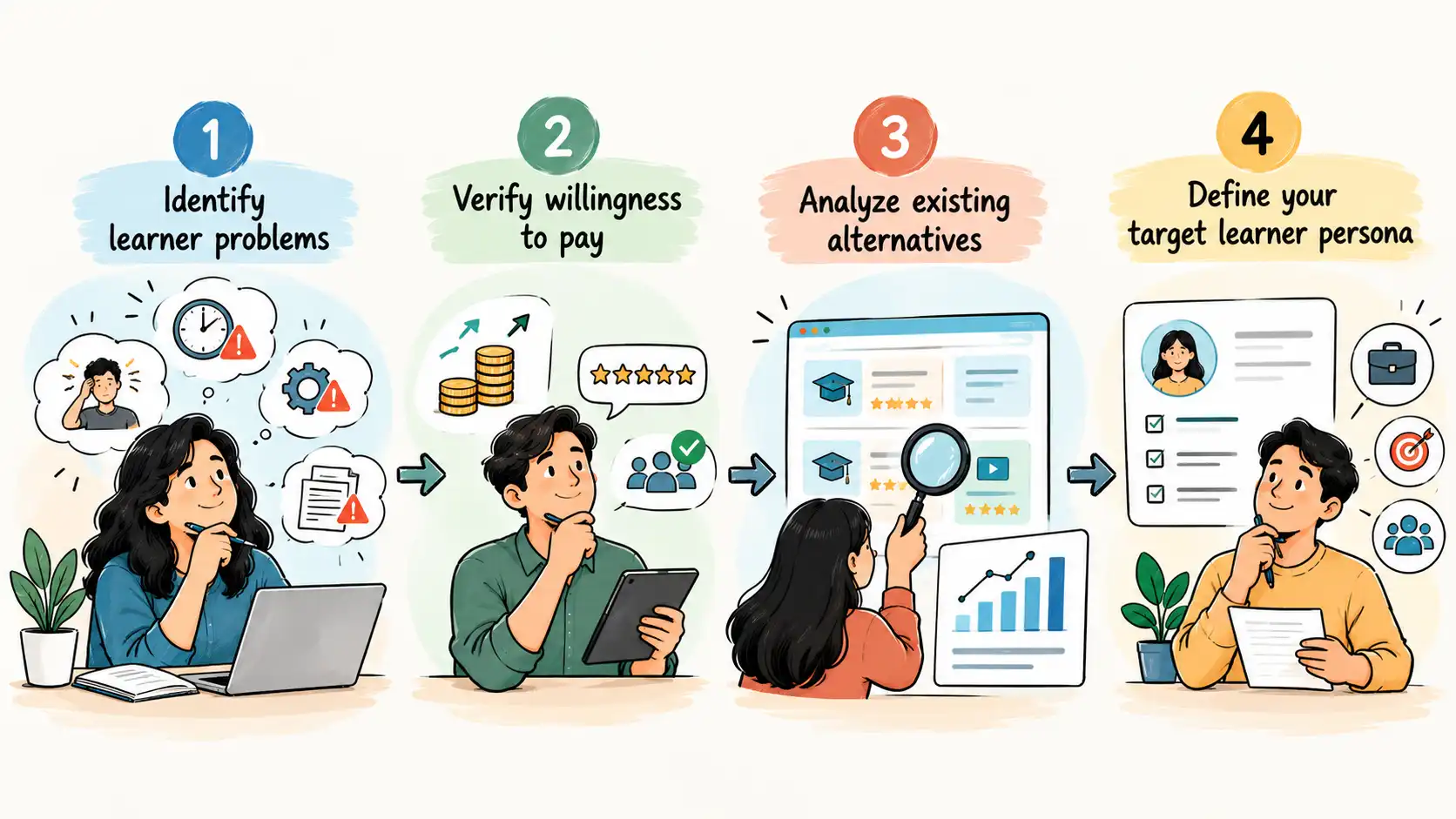
Validating a profitable course topic requires a sequential, objective approach. Follow this four-step framework before writing a single script or opening an authoring environment.
Step 1: Identify Urgent Operational Pain Points
Look closely at your daily consulting calls, client emails, or internal team friction points. What questions do people ask you repeatedly? What problems cost your audience time, money, or compliance penalties? Focus exclusively on high-friction challenges where inaction is expensive.
Step 2: Verify Willingness to Pay (Financial Friction Mapping)
People are always willing to pay to remove financial or operational pain. Evaluate whether your target audience already spends money to solve this problem—through software, books, consulting, or inefficient manual work. If they are not currently spending money to solve it, the market demand may be too weak to sustain a profitable program.
Step 3: Analyze Existing Market Alternatives
Look at what competitors, industry blogs, and existing training platforms are offering. You can also use Google Trends to explore interest in potential course topics and identify whether interest in a subject is increasing, declining, or remaining relatively consistent.
Step 4: Define Your Target Learner Persona
Build a precise profile of your ideal student. Document their daily responsibilities, technical skill levels, and operational constraints. For a complete framework on this phase, read our guide on Creating Learner Personas to Improve Online Training.
Practical Examples: Translating Expertise into Profitable Modules
Let’s examine how two different professionals apply topic validation before building their digital learning programs.
- The B2B Consultant: Instead of building a broad course on “Business Management,” a seasoned consultant identifies that mid-level managers struggle specifically with cross-departmental compliance reporting. By narrowing the topic to Compliance Reporting Frameworks for Operations Managers, they target an urgent operational bottleneck with high financial stakes.
- The Corporate L&D Director: Rather than deploying a generic safety video library, an enterprise training leader identifies that remote field technicians consistently fail safety protocol checks during high-pressure maintenance tasks. They validate a topic focused on Real-Time Hazard Identification for Field Technicians, paving the way for interactive scenario-based modules built in Articulate Storyline and Rise.
Best Practices for Course Topic Selection
Once you have identified and validated a potential topic, use a few principles to strengthen your final decision.
Niche Down to Scale Up
Broad topics may appear attractive because they seem capable of reaching a larger audience. However, broad positioning can make it difficult for learners to understand exactly what value the course provides.
A more focused topic allows you to communicate directly with a specific audience experiencing a specific problem.
For example, instead of:
“Digital Marketing”
a more focused course might address:
“Digital Marketing Strategies for Small Professional Services Businesses.”
Specificity can make your expertise easier to position and can help learners immediately determine whether the course is relevant to them.
Focus on Outcomes Over Information
A course should not simply become a collection of information, presentations, PDFs, or videos.
Learners need to understand what they will be able to do differently after completing the course.
Instead of asking:
“What information can I include?”
ask:
“What should the learner be able to accomplish after completing this course?”
This shift can help you build learning objectives and activities around meaningful outcomes rather than simply accumulating content.
Align Topic Scope With Technology
Once the topic and learning requirements are clear, consider how the course should be delivered.
Different learning needs may require different approaches.
Complex operational behaviors may benefit from interactive scenarios, decision-making activities, and branching experiences. Foundational knowledge may be more appropriate for concise lessons, microlearning, and straightforward knowledge checks.
The technology should support the learning strategy.
It should not determine the learning strategy.
For more on how shorter learning experiences can support modern learners, explore our analysis on Is It Important to Add Microlearning to Your Learning?.
Common Mistakes to Avoid
- Solving a “Nice-to-Have” Problem: Choosing a topic that is interesting but non-essential. Learners pay to eliminate friction, not to collect trivia.
- Skipping Market Research: Designing an entire curriculum before testing whether the audience actually wants or needs the specific deliverables you plan to teach.
- Choosing the LMS Before the Curriculum: Making the mistake of selecting your software platform before defining your learning objectives and course structure. Your curriculum must always dictate your technology—never the other way around.
Summary
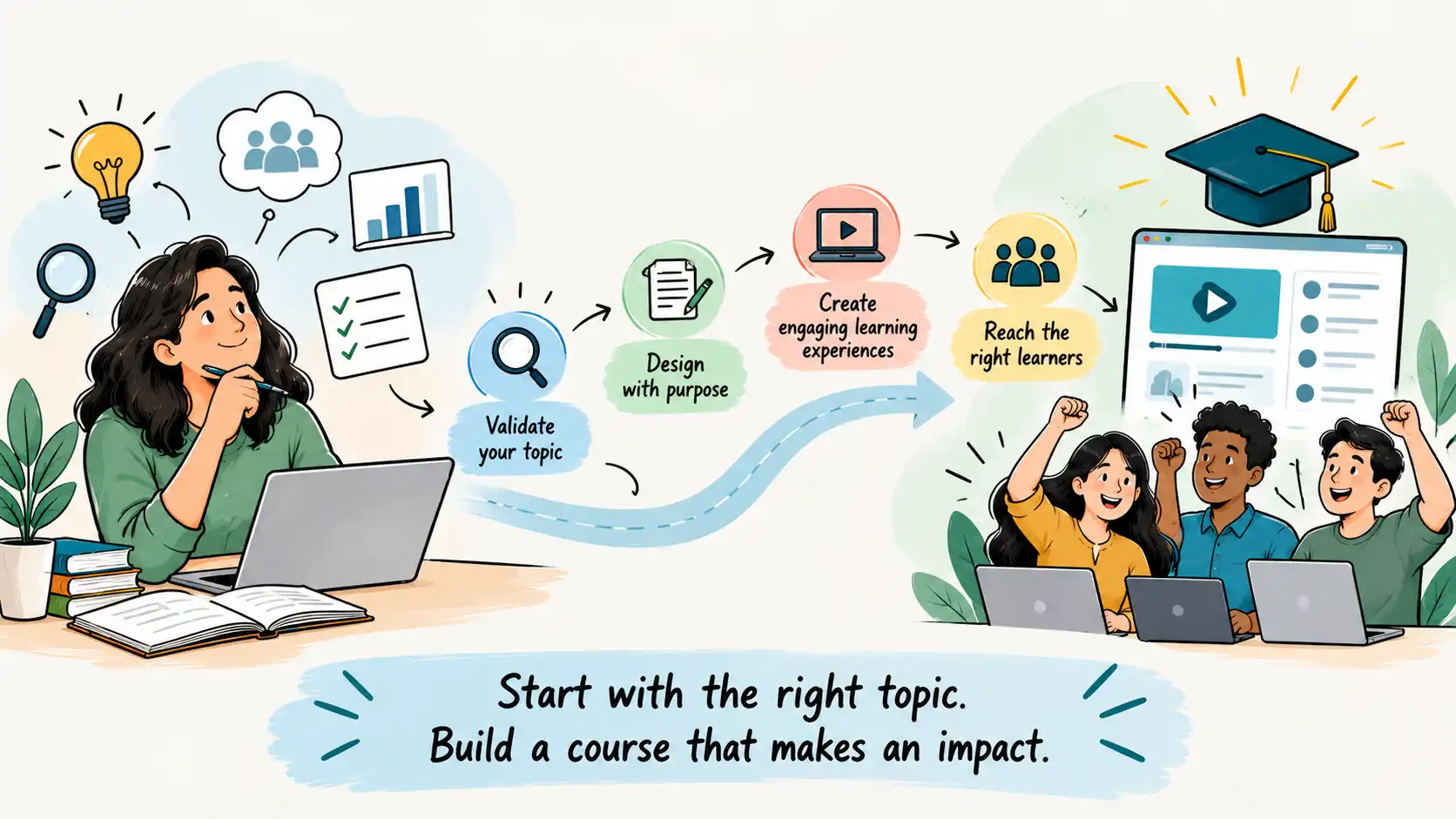
Finding a profitable course topic is more than an exercise in brainstorming ideas. It is a structured process of understanding your audience, identifying meaningful problems, examining existing solutions, and determining whether the problem has enough value to justify investment.
Start by identifying urgent operational pain points. Then examine whether your audience is already investing resources to solve those problems. Study existing alternatives to identify gaps, and finally build a clear learner persona that helps you understand who the course should serve.
Once your topic has been validated, you have a stronger foundation for everything that follows—including learning objectives, instructional design, course structure, interactions, assessments, authoring tools, and LMS deployment.
Most importantly, remember that the goal is not simply to create another online course.
The goal is to create a learning experience that solves a real problem for a real audience.
A validated topic gives you the foundation to do exactly that.
Ready to turn your validated topic into an engaging learning ecosystem? Explore our professional architecture services through Wizcabin Solutions & E-Learning Architecture or speak directly with our team through Contact Wizcabin / Strategy Consultation.
Frequently Asked Questions (FAQ)
- How do I know if my course topic has enough market demand?
Market demand is verified when your target audience is already spending money or allocating valuable time to solve the exact problem your course addresses. Look for active search volume, existing book sales, and paid consulting inquiries in your niche. - What if my course topic is too narrow?
In professional education and B2B training, specificity is an asset. A narrow topic allows you to speak directly to an urgent operational bottleneck, resulting in higher completion rates and stronger perceived value. - Should I build the course before validating the topic?
Never build a full curriculum before validation. Pre-selling your concept, surveying your audience, or testing demand with a pilot cohort saves countless hours of unoptimized production work. - How does topic selection impact instructional design?
Your validated topic dictates your instructional strategy. Complex operational topics require interactive branching scenarios, while foundational knowledge suits microlearning modules built in tools like Storyline and Rise. - Can I have multiple topics in one online academy?
Yes, but they should be organized into logical learning pathways or catalogs rather than lumped into a single disorganized course. Review our strategic breakdown on Free vs Paid Courses: Strategic Guide. - What is the difference between a passion topic and a profitable topic?
A passion topic is what you enjoy teaching regardless of market interest. A profitable topic bridges a costly operational or professional gap that your learners have an urgent financial need to solve. - How do I validate a topic if I don’t have an existing audience?
You can validate topics by analyzing professional forum discussions (like LinkedIn or Reddit), reviewing competitor course enrollment numbers, or conducting targeted keyword and search demand research. - How do enterprise L&D teams choose training topics?
Corporate training leaders identify performance gaps, compliance risks, and productivity bottlenecks within their organization, aligning course topics directly with measurable operational KPIs. - What role does my LMS play during topic selection?
Your LMS platform choice should always come after you have defined your curriculum structure and learning objectives. Never let software limitations dictate your educational strategy. - How do I transition from topic validation to course authoring?
Once validated, map your topic into a structured storyboard blueprint before opening an authoring tool. Read our guide on Why You Should Start with an E-Learning Storyboard to begin.
Stop Building Courses. Start Building Learning Experiences.
Stop guessing what your learners want to study. Partner with Wizcabin to validate your curriculum, structure your instructional design, and deploy a high-performance learning academy from day one.
Explore our comprehensive services via Wizcabin Solutions & E-Learning Architecture or Contact Wizcabin / Strategy Consultation to speak directly with an e-learning specialist today.