
In This Guide:
Introduction
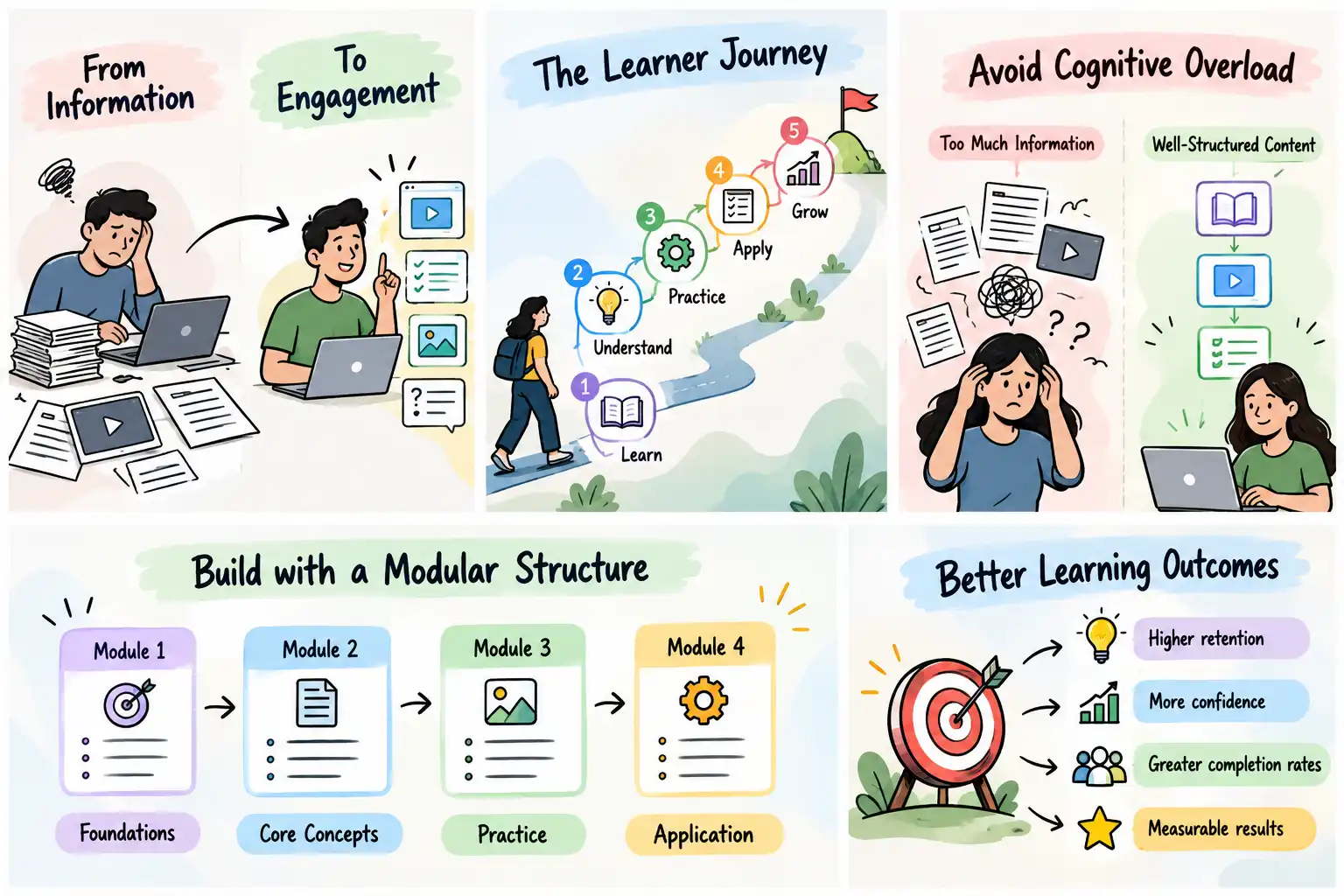
An engaging online course is more than a collection of videos, PDFs, presentations, and quizzes placed inside an LMS. It is a carefully designed educational experience built around the learner’s journey, the desired outcomes, and the actions learners need to perform after completing the training.
Instead of simply transferring existing classroom materials into a digital format, effective course design considers how learners will move through the content. Complex subjects can be divided into manageable microlearning units, foundational concepts can be introduced before advanced applications, and practice opportunities can be incorporated throughout the experience.
This learner-centered approach helps transform training from passive information delivery into an experience where learners can understand, practice, apply, and reinforce what they are learning.
Engagement is therefore not an aesthetic afterthought. It is part of the instructional architecture.
A course may have attractive graphics, animations, and a modern interface, but these elements alone cannot create meaningful engagement.
If learners are presented with lengthy videos, dense PDFs, disconnected topics, or unclear instructions, they may struggle to understand what matters and what they are expected to do.
The structure of the learning experience plays a much more important role.
A well-designed course gives learners a clear sense of direction. They should be able to understand where they are, what they are learning, why the information matters, and what they need to accomplish before moving forward.
To see how professional modular design comes to life in real digital learning environments, explore our Example Courses & Interactive Demos.
Why Engagement Matters: Protecting Working Memory
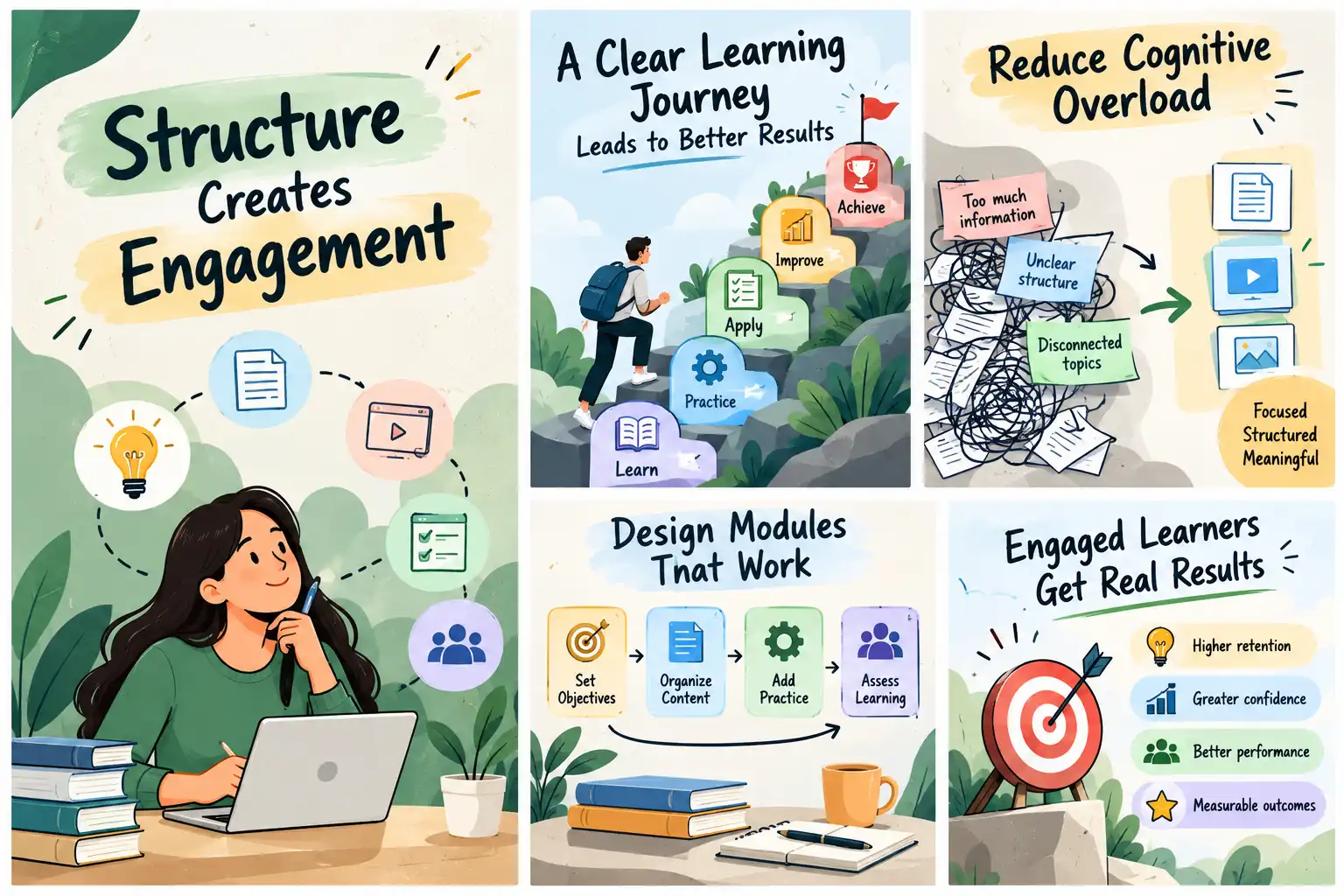
Engagement is not simply about keeping learners entertained with gamification, animations, or decorative interactions. Meaningful engagement comes from creating an experience that makes it easier for learners to focus on the information, practice the required skills, and understand how the learning applies to their role.
When learners encounter unstructured walls of text, lengthy video lectures, or multiple disconnected resources, they may spend considerable mental effort figuring out how to navigate the course rather than focusing on the learning itself.
This is where cognitive overload becomes a concern.
When too much information is presented without a clear structure, learners may struggle to identify which concepts are essential, which information is supporting material, and what they are expected to remember or apply.
Effective instructional architecture helps address this challenge by organizing information into logical sections and manageable learning experiences.
For example, instead of presenting an entire subject as one long module, the topic can be divided into focused lessons. Each lesson can introduce a specific concept, provide an opportunity to practice or reflect, and then prepare the learner for the next stage.
This creates a more predictable learning journey.
When training modules feel like connected, logical steps rather than isolated containers of information, learners can move through the experience with greater confidence. The course becomes easier to navigate, easier to maintain, and easier to align with measurable learning outcomes.
Who Needs This Framework?
Building engaging digital courses is especially important for organizations and professionals responsible for turning expertise into scalable learning experiences.
Corporate Trainers and L&D Directors
Corporate training teams often need to deliver onboarding, compliance, skills development, and professional training across distributed teams.
A structured approach helps them create consistent learning experiences without overwhelming employees with excessive information. Clear modules also make it easier to maintain and update training when processes, policies, or organizational requirements change.
Coaches and Consultants
Coaches and consultants often have extensive knowledge built through years of professional experience.
The challenge is transforming that expertise into an online learning experience that can be delivered consistently to multiple learners.
A modular structure can help separate the methodology into logical stages, allowing learners to progress through the material while still preserving the expertise behind the program.
Subject Matter Experts
SMEs bring the depth and technical accuracy required to create credible training. However, their knowledge may be significantly broader than what learners need during the core learning experience.
Instructional design helps identify the information learners need to achieve the objective and separate it from useful but secondary reference material.
Educational Organizations
Educational organizations moving from traditional presentations or static resources to digital learning need more than a technology platform.
They need a learning structure that supports navigation, practice, assessment, and progression.
A thoughtful instructional framework provides the foundation for making that transition effectively.
Common Mistakes That Kill Course Engagement
Even well-funded training initiatives can lose learner engagement when the instructional structure is not planned carefully.
Choosing Technology First
One common mistake is selecting an LMS or authoring tool before mapping the learning experience.
When technology comes first, course creators may begin organizing content around available templates, blocks, or platform capabilities.
Instead, instructional design should establish the learning objectives, content structure, activities, and assessment approach first.
The technology should then support that design.
Explore our architectural framework at Wizcabin Solutions & E-Learning Architecture.
The “Brain Dump” Approach
Another common problem is attempting to include everything an expert knows.
While comprehensive source material may be valuable, the core course should not function like an encyclopedia.
When every piece of information receives equal emphasis, learners may struggle to identify what is most important.
A stronger approach is to organize the core experience around the primary learning objectives and move supporting information into appropriate reference resources.
Waiting Until the Final Exam
If learners encounter an assessment only after completing the entire course, they may have no opportunity to identify misunderstandings earlier.
Short knowledge checks, reflection questions, practice exercises, or scenario-based decisions can provide opportunities to check understanding throughout the learning experience.
Ignoring Scaffolding
Learners should not always be expected to move directly from basic information to complex application.
Foundational terminology and concepts may need to be established first. Learners can then progress toward demonstrations, practice, and increasingly complex applications.
This gradual progression gives learners the support they need before they are expected to perform independently.
How to Build an Engaging Online Course
Transforming scattered training materials into an engaging educational experience requires a repeatable approach.
Step 1: Define Clear Behavioral Objectives
Begin with what learners should be able to do, rather than simply what information they should know.
A vague objective such as: “Understand compliance.” does not clearly communicate what successful learning looks like.
A behavioral objective should describe an observable outcome. It gives the instructional designer a clear basis for deciding what content belongs in the module, what practice learners need, and how understanding should be assessed.
Once the objective is defined, every major element of the module can be evaluated against it. Ask whether the content supports the objective, whether the activity provides useful practice, and whether the assessment measures the intended outcome. This approach prevents unnecessary information from entering the course simply because it exists in the source material.
Step 2: Chunk Content Into Microlearning Units
Once the objectives are clear, divide the broader subject into logical learning units.
A large topic can initially be divided into several focused modules, with each module containing shorter lessons centered on specific concepts or skills.
The purpose of chunking is not simply to make the course shorter.
It is to make the learning experience easier to navigate and process.
Instead of asking learners to work through one long lesson, the course can provide smaller experiences that allow them to complete one concept before progressing to the next.
For professional learners, shorter learning units can also make training easier to fit around workplace responsibilities.
(For a deeper dive into organizing your curriculum before digital production, read our guide on Why Should You Start with an E-Learning Storyboard).
Step 3: Scaffold Your Progression
After the content has been divided into manageable units, determine the order in which learners should encounter those units.
Not every concept should be introduced at the same level of complexity.
A learner may first need to understand basic terminology and principles before they can interpret a demonstration or respond to a realistic scenario.
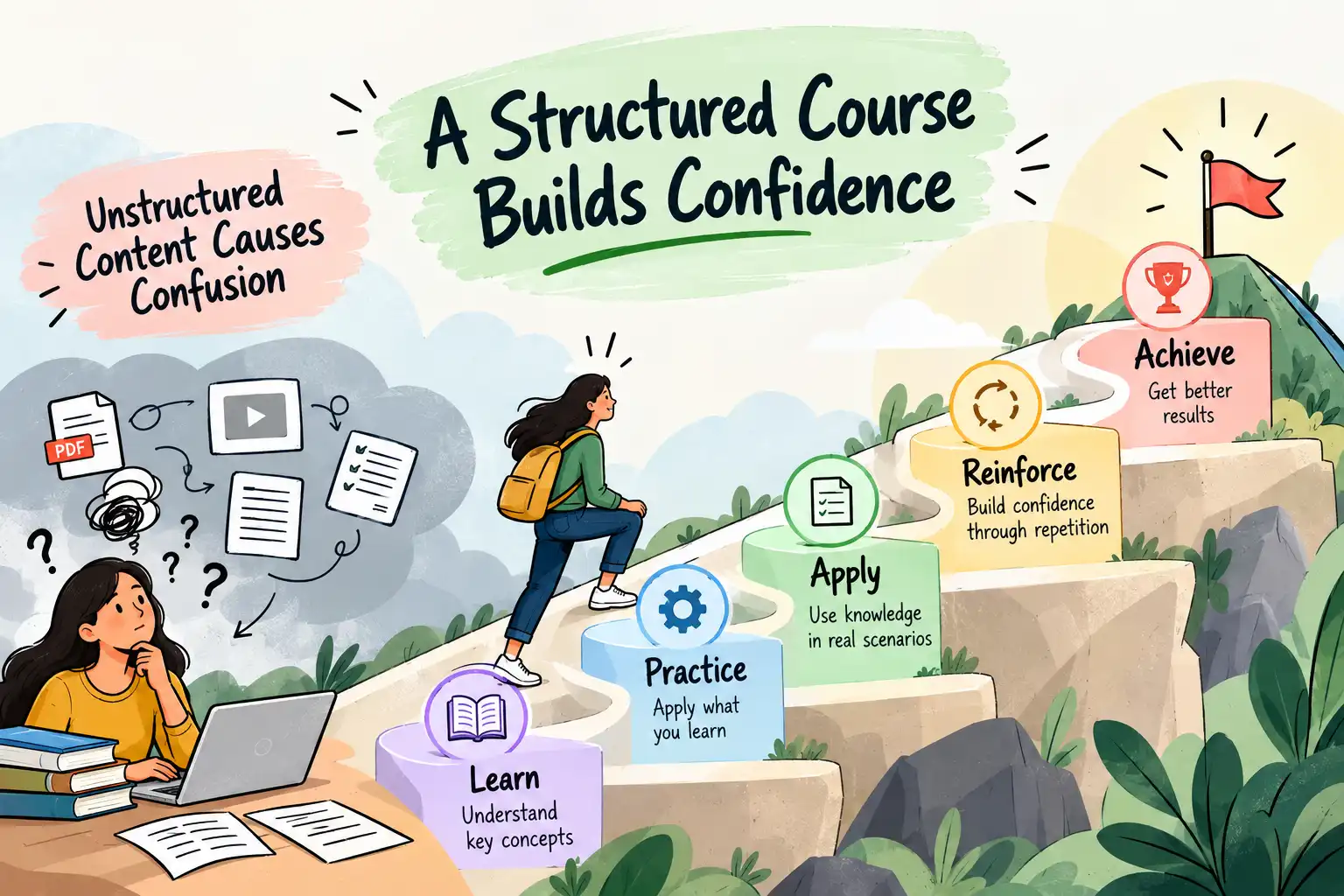
A structured progression can therefore move learners through stages such as:
Foundation → Explanation → Demonstration → Practice → Application → Assessment
This creates a learning path where each stage prepares learners for the next.
The goal is to gradually reduce the amount of support provided as learners become more confident and capable.
Rather than treating modules as isolated containers of information, connect them so that the learner can see how one stage contributes to the next.
Step 4: Integrate Formative Assessments
Assessment should not be reserved exclusively for the end of the course.
Formative assessment provides learners with opportunities to check their understanding while they are still learning.
These activities can include:
- Quick knowledge checks
- Reflection questions
- Scenario-based decisions
- Matching activities
- Short quizzes
- Practice exercises
- Application questions
The purpose of these activities is not always to produce a score.
They can help learners recognize gaps, reinforce important concepts, and prepare for the next stage of the course.
This creates a continuous learning loop:
Learn → Practice → Check → Reinforce → Continue
(Ensure your modules report completion data reliably back to your enterprise platform by reviewing our technical overview on How SCORM Works: Complete Technical Guide).
How to Build an Engaging Online Course
Subject matter experts are essential to creating accurate and credible learning experiences. Their professional knowledge provides the depth required to build meaningful training.
However, SMEs may naturally want to include extensive background information, technical details, examples, exceptions, and supporting resources.
The instructional design challenge is not to remove their expertise.
It is to determine where that expertise belongs within the learning experience.
The main course should remain focused on the information learners need to achieve the primary behavioral objectives.
Additional regulatory background, detailed history, supporting documentation, and supplementary reading can be moved into downloadable resources or reference libraries when appropriate.
This creates a useful distinction between:
Core instructional content
Information learners need to complete the learning objective.
Supporting reference content
Information that may be useful but is not essential to the primary learning path.
This approach allows organizations to preserve valuable SME knowledge without requiring learners to process all of it during the core course.
Summary
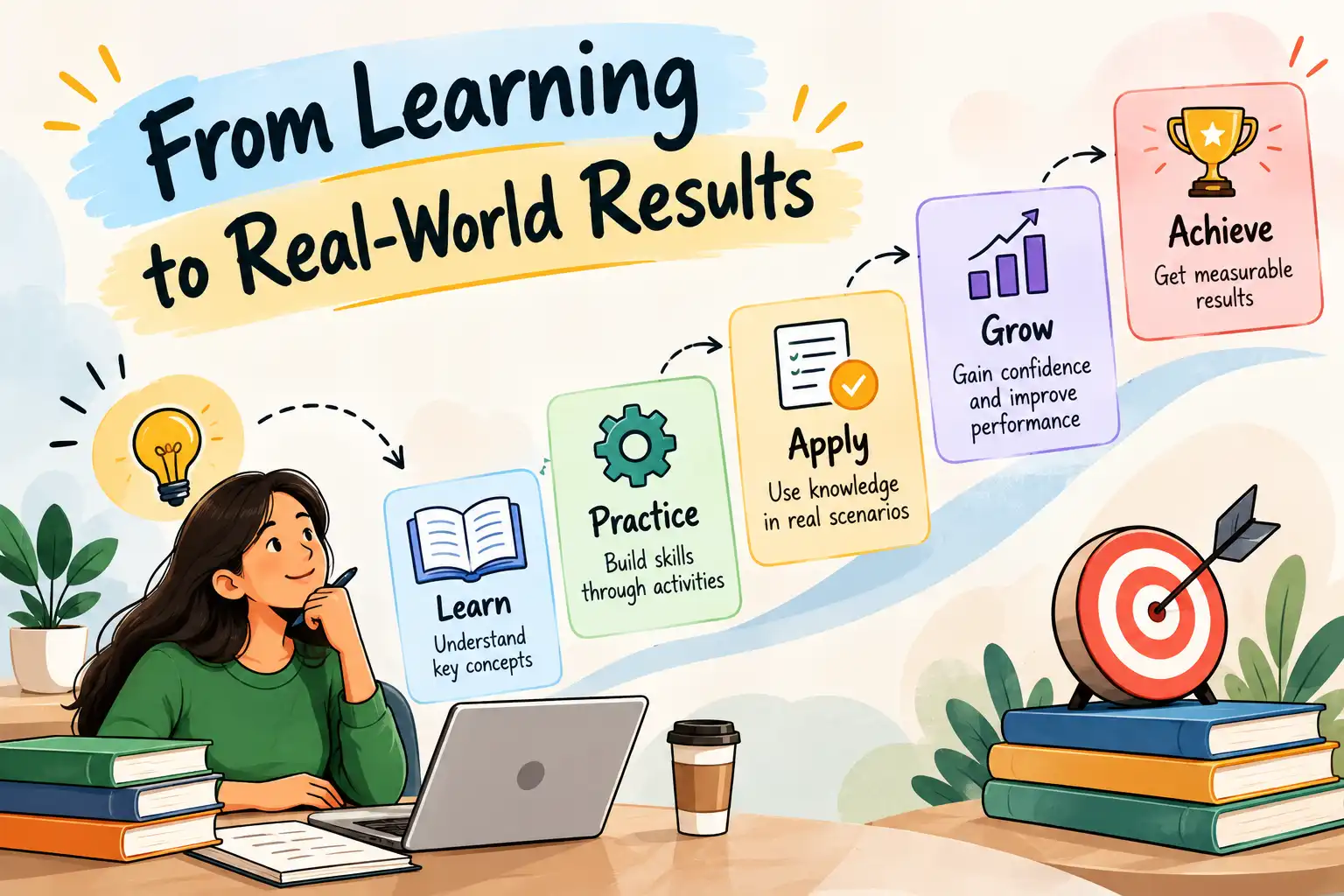
Engagement is not something that needs to be added to a course at the end of development. It is created through thoughtful instructional design.
When you prioritize curriculum architecture over software templates, define clear behavioral objectives, divide complex subjects into manageable learning units, scaffold progression, and provide opportunities for learners to check their understanding, the course becomes easier to navigate and more purposeful.
The goal is not simply to help learners complete a course.
It is to help them move from what they currently know to what they need to be able to do.
Whether you are auditing an existing curriculum or launching a new enterprise academy, a structured instructional approach can help turn scattered information into a coherent learning experience.
Frequently Asked Questions (FAQ)
1. Why do traditional online training courses fail to keep learners engaged until completion?
Traditional courses fail because they confuse “delivering information” with “facilitating learning.” Unstructured walls of text, dense PDFs, and unguided video lectures trigger cognitive overload, forcing working memory to waste energy on navigation rather than absorption.
2. Why should I map my curriculum on a whiteboard before choosing an LMS or authoring tool?
When you start with technology, your course structure gets dictated by platform templates and block limitations. Your instructional design and engagement model should always drive your technology stack—never the reverse.
3. How do I stop subject matter experts from overloading core modules?
Separate core instructional content from secondary reference material. Streamline the main course around primary behavioral objectives, and bundle regulatory background details into downloadable resource libraries.
4. What is the ideal duration for a microlearning module?
Individual microlearning lessons should typically last between 5 to 15 minutes. This timeframe respects human attention spans and protects working memory from fatigue.
5. Why are formative assessments better than a single final exam?
Waiting until a final exam creates a broken feedback loop. Sprinkling low-stakes knowledge checks throughout your micro-units allows learners to test their understanding and close knowledge gaps in real time.
6. What is instructional scaffolding?
Scaffolding is a step-by-step teaching method that provides temporary support as learners move from foundational terminology to core functions, real-world demonstrations, and finally safe practice scenarios.
7. Should I build my digital training in Rise or Storyline?
Map your content structure on a whiteboard or storyboard first. Choose Rise for responsive, text-heavy instructional blocks, and select Storyline for complex, scenario-based decision interactions. (Explore our architectural solutions at Wizcabin Solutions & E-Learning Architecture).
8. How do I write an effective behavioral objective?
Reject vague goals like “understand compliance.” Write down the exact, observable operational task the learner must be able to perform upon completing the training module.
9. How do SCORM packages ensure reliable LMS tracking?
SCORM standards package your interactive modules, so they communicate completion status, quiz scores, and bookmarking data reliably back to your enterprise learning management system. (Review our technical guide on How SCORM Works: Complete Technical Guide).
10. Where can I see examples of professional course development?
You can explore live functional models and modular layouts by browsing our Example Courses & Interactive Demos.
Let’s Build Better Learning Experiences
Mastering course engagement is the foundation of high-retention education. Whether you are auditing an existing curriculum or launching a new enterprise academy, expert guidance ensures your training delivers measurable results.
If your organization needs a trusted end-to-end partner to map, design, and deploy professional training programs, contact the Wizcabin team for a strategy consultation. We handle everything from instructional blueprints to custom Storyline development and full LMS deployment.